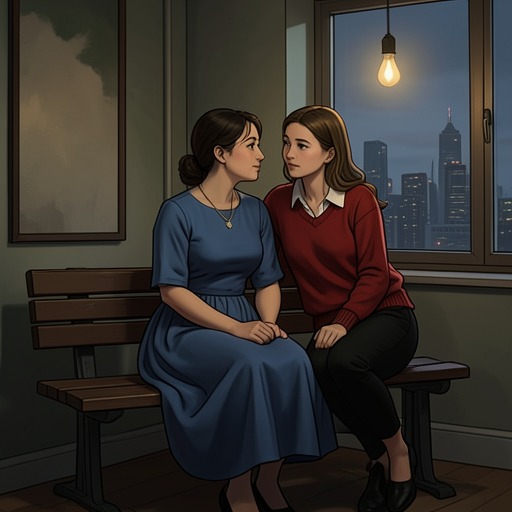
“Your story, darling. Please, I’ve been waiting all day.”
The Life List“Your story, darling. Please, I’ve been waiting all day.” is Elizabeth Bohlinger’s affectionate invitation to her daughter, Brett Bohlinger, to tell the day’s amusing story. First heard as part of their shared dinner ritual, it returns in Brett’s memory after her mother’s death and steadies her before her first stand-up performance. The line links intimate family storytelling with the risk of speaking before an audience.
A Ritual of Listening
When Brett encountered something funny, she wanted to share it with Elizabeth. Elizabeth might ask to hear the story immediately, but more often she invited Brett to dinner. Once the wine had been poured, she leaned in, tapped Brett’s arm, and delivered the familiar invitation. Her words made the telling an eagerly anticipated part of their time together: Elizabeth was not simply hearing a report, but giving Brett her full attention and asking her to perform the story for her.
Brett embellished her tales with accents and dialects, and Elizabeth’s laughter was vivid enough to return to Brett after her death. Remembering the dinners, the tap on her arm, and Elizabeth dabbing tears from the corners of her eyes changes the emotional force of the phrase. At first, the memory of her mother had brought Brett sadness; recalling this routine makes her smile, marking a moment when remembrance also gives her happiness.
The Phrase at the Microphone
The invitation resurfaces when Brett climbs onto the stage at Third Coast Comedy for her first performance. Her legs shake, the bright spotlight blinds her, and the expectant crowd leaves her unsure how to begin. She closes her eyes and imagines sitting at Elizabeth’s dining-room table, hearing the familiar words. The remembered invitation helps her take a deep breath and begin the set.
The phrase therefore carries the warmth of a private exchange into a public, frightening moment. Elizabeth had once invited Brett to turn daily observations into stories over dinner; now Brett draws on that remembered welcome as she faces an audience without her mother. The line does not remove her fear, but it gives her a way into the performance—and lets the bond expressed through listening and laughter persist in her mother’s absence.